CAUGHT ON TAPE


I spent three days this week covering the 2012 Office of Naval Research Science and Technology Partnership Conference at the Hyatt hotel in Crystal City. I've covered this bi-annual event many times before and know that it will require me to be in many places throughout the day, moving from the plenary session to the exhibit hall and then to the multiple breakout rooms. Additionally, since I provide images for our social media use, I know I will be downloading, captioning and transmitting twice, sometimes three times a day. All this means I'm pretty focused on getting each shot while already thinking about where I need to be next and when I'll get the chance to download.  What's the point of this post, and the title, Caught on Tape? Well this year, as we've done in the past, we had a dedicated video team consisting of a photographer and producer covering the conference. As part of that coverage, they produce a daily highlight video which is shown at the start of the each day.

So I'm in the back of the room at the start of the second day watching the highlight video from the first day and lo and behold I see myself on the giant screens in the front of the room. Not once, or even twice, but a total of five times. Now this is only a five-minute video mind you.

Well, I thought it might be fun to edit that five minutes down to a 30-second clip showing my first two appearances and insert the still images that I captured while simultaneously being captured myself. I'm normally very aware of cameras around me and try to stay clear in order to avoid having this happen. Not so much this time.

Is this a fail? Probably not, since I'm sure I'm the only one who noticed myself. Okay, it would be hard to miss me as I move in behind the vice chief of naval operations.
PHOTOGRAPHY IS A PAIN

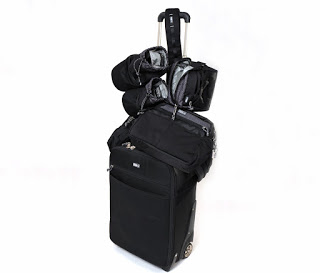
Think Tank roller with pouches for use once on location.
Photography is a pain – pain in the shoulder and back that is. When I started in this profession I carried my gear in an over-the-shoulder Domke bag. And at the time I also carried all the gear I owned to every job. So it was simple, when I obtained more gear, I purchased a larger bag, the Domke Little Bit Bigger Bag to be specific.

So in my case, like many photographers, all the years of carrying gear over my right shoulder has led to shoulder pain. Nothing severe, just enough to be noticeable. So over time I've come up with a few techniques and tips to avoid this pain and hopefully if you're just starting out, allow you to avoid it in the future.

And it all starts by getting that gear off of your shoulder. Below I offer five tips.

1. Use a roller bag like the Think Tank Airport series or roller case such as the Pelican Case to get your gear to and from the assignment. It allows you carry maximum gear without putting any strain on your body.

2. Tip one gets the gear to the location, but then what? I'm a fan of the Think Tank Modular system which allows you to then use accessory packs to carry and organize your gear once there. You can load up that large roller bag or Pelican Case, then easily customize later. The belt and pouch system distributes the weight evenly on your hips and if you add a harness, you won't even notice that you are carrying camera equipment.

3. Change your traditional camera straps to something like the BlackRapid line of products. These across the chest camera slings do not put as much pressure on a given shoulder. Plus they have the added benefit of not allowing the camera to slip off your shoulder. Once you get use to it you almost forget about the camera hanging at your side.


4. Match gear to the assignment given. In previous blog posts I've talked about traveling light, with minimum gear. It is a hard habit to break and you will spend lots of time second guessing yourself, but if you really take a look at what gets used and what never leaves your pack, you can start to hone your packing.

5. I suppose I would be remiss if I didn't mention diet and exercise to strengthen your shoulder or back. We all know what is right, but let's face it, even if I was practicing good healthy practices 30 years ago, I'm pretty sure I'd still have some of the same issues as I close in on 50. Just be practical and remember that the body does start to wear out, so why speed the process by lugging too much when you're young.

So slow down, pack right, really think through what gear you bring and be sure to take care of your body. And get out there and shoot.

WORLD WIDE PHOTO WALK

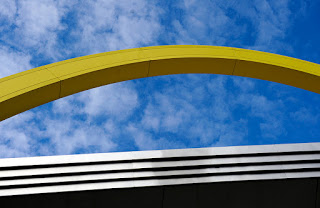
Photo taken during a solo photo walk in Chicago last week.
On October 13th 28,000 photographers will participate in 1,300 local photo walks around the world. I will be in in Washington, D.C., participating in my first.

Photo walks are essentially walking with your camera for the sole purpose of taking pictures of things you find along the way. They can be done alone or as part of a group and sometimes are led by an experienced photographer who will offer tips along the way.

The Worldwide Photo walk is the brain child of Photoshop expert and photographer Scott Kelby and if like me you've never taken part in a group photo walk, I think this is the perfect opportunity. While most of the world wide photo walks filled up quickly, you can check here to see if there are openings in your area or add your name to a waiting list.

As I stated above, I've never taken part in a group photo walk, however, I think being part of a group offers several things that a solo photo walk can not. It is a chance to share what you know with others while learning something from them. I provides you the opportunity to see photographs taken by others at the same time and location as you were shooting thus allowing you to reflect on your own work and vision. Finally, the peer pressure ensures you actually get out and shoot.

I will be participating in a three two hour photo walk that starts at 6 a.m. and focuses on Capitol Hill and the The Mall. Not sure exactly what gear I'll bring, but it will be minimal for sure. Years ago I accompanied my wife during a business trip to Paris and while she was in meetings during the day I had the opportunity to walk around the city just taking photos. I traveled to France with pretty much all the gear I owned at the time, but in the end found that my Nikon FM2 with a 24mm lens and a few rolls of film allowed me the freedom to really explore the city.

My goal during this photo walk will be to enjoy the company of fellow photographers. My only regret is that I have a 10 a.m. assignment at Mount Vernon which means I will not be able to stick around following the walk. Very disappointing, but not enough for me to cancel.

Check out the Official World Wide Photo Walk Facebook page or follow the official walk on Google+ or on Twitter using the hastag #WWPW.

5 TIPS FOR TAKING BIG GROUP PORTRAITS

120 person group photo with limited time. Nikon D3s with SB900 (camera left) and SB800 (camera right), both controlled with an Nikon SU800 and processed in Lightroom 4.

120 person group photo with limited time. Nikon D3s with SB900 (camera left) and SB800 (camera right), both controlled with an Nikon SU800 and processed in Lightroom 4.

I'm often asked to shoot large groups of people, mostly at the last minute and usually with few options as to time and location. It's as if all of a sudden it occurred to someone that while all 150 people are gathered at an event in a hotel conference room, about to break for lunch, don't want to leave the property and there is a photographer present, it would be the perfect time to get that group shot they always wanted.

Even under the best of circumstances, with all the planning time possible, photographing large groups is challenging and requires skill, patience and above all leadership.

Below are five tips to increase your success in pulling off that epic large group shot.

1. Take Charge. From the time a group shot is suggested, the requester will be looking to you to make some decisions. Don't panic. Think fast and be sure to set expectations given time and location options, the size of group and what outcome can be expected given all those factors. This is not a time to be shy or quiet. You need to make the announcement and tell the group what you are being asked to do and what you need them to do. Once the process begins, enlist help with moving people, chairs, tables, plants and generally preparing the location. Do your best to make it fun.

2. Scout a location. Unless the sole purpose of this gathering was for a group portrait it is not a good idea, and nearly impossible, to make them move very far from where they are meeting or gathering. For instance, even if a great location exists on another floor or more than a block away, asking over 100 people to take elevators or leave a building is not going to happen. Besides time is a normally a major factor, so find a place that is convenient to where they are and easy to get to. Time is crucial and you want every one arriving around the same time. Ideally the key people should arrive first (see tip 4).

3. It's all about the angle. You have two choices, elevate the group using stairs or bleachers or elevate yourself using a ladder, shooting from a balcony, or if you do have any advanced notice, shooting from a bucket lift. Many hotels or conventions have ladders and bucket lifts available if you talk to the right person. Normally I prefer to elevate the group and then back off a bit so everyone is looking more or less at me from a slightly down angle. When the photographer is elevated people have to look up which can sometimes look awkward. Ideally elevate the group and yourself in order to shoot almost straight on.

4. Arrange and position. This is where you really have to take charge. Arrange the key individuals as if you were shooting a small group portrait. If they are tall or vary greatly in height, getting them to sit might help, in fact using chairs for the first row is a good idea. Once the key individuals are positioned, your foundation is set and then you can direct everyone else can fall in around them. Set your outer limits and make sure taller individuals are to the rear. Some people need to be told they are not tall and while you don't actually call that point out, just start telling them where to stand. Also watch out for the person that wants to hide because they really don't want to be in the photograph. It's your call whether or not you let them get away with it, but make sure that they do not distract from the final portrait.

5. Take a moment. Once this large group is assembled, take a second to relax and just look at them before raising the camera to your eye. Remember you've been running around, giving orders, telling people to move and now you want everyone to just relax, let the stress disappear. Make quick eye contact as you scan the group and remind people that if they can't see you, then it is likely the camera will not see them. Make final adjustments and shoot. And shoot some more, while reminding everyone to look at the camera.

Being asked to shoot last minute large groups is not easy, but if you take charge of the situation and approach with a positive attitude, it will translate to the group and increase your chances of success.

Bonus. The hard part is over so now it is time to have fun. Ask everyone to fold their arms, cheer, indicate that they are number one (make sure they are using their index finger) or just really smile one last time or they can't leave.

AS A STAFF PHOTOGRAPHER IS TRAVEL NECESSARY?

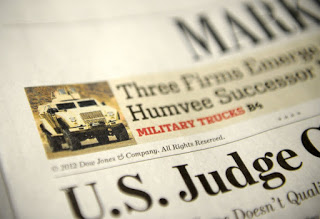
Friday, August 24, 2012, edition of the Wall Street Journal.

I'm sometimes challenged on why I need to travel in order to cover an assignment when a local photographer might be available. Wouldn't it be less expensive? The answer is not always. How would my coverage be different? Read on.

Don't get me wrong, sometimes it doesn't make sense for me to travel to an assignment, and in those cases I'm the first to admit that it may be best to see if a local asset is available. Or it might even make sense to hand a point-and-shoot camera to the writer or exhibit coordinator who is already attending the event.

I also don't take it personally. However, if you have a professional photographer on staff and you don't use them, are you really saving money? Will the images be used beyond Facebook or internal publications? Is there national media interest or will there even be something to photograph? These questions need to be asked.

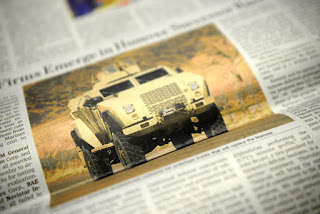
As an example, I was looking through the Friday, August 24th edition of the Wall Street Journal and immediately recognized one of my images. It was a photo of the Combat Tactical Vehicle technology demonstrator that I took during an assignment at the Nevada Automotive Test Center in Carson City, Nev., in 2008. It was being used to illustrate an article about companies competing to build a successor to the Humvee.

The combat tactical vehicle as it appeared in the Wall Street Journal.

How does this relate to the theme of this blog? When I travel on assignment for my employer, everything I do, from the way I approach the assignment, caption the photographs or edit the video, is designed to tell their story. This isn't the first time that photos taken during one assignment and for one purpose were used time and time again, often for completely different reasons. The key to this happening is that the photos were professionally taken along with a detailed caption containing enough key words that the photo can be found while doing a search, especially on a broad range of topics. That is best accomplished by a staff photographer.

As a staff photographer, from the time I receive the assignment and begin my research, I know the story, why it is important to my client and who the key players are. That all translates into how I market the image which makes a huge difference down the road.

In the end, a staff photographer is always going to have your best interests in mind and not be distracted  by other things going on around them. So when asked if I need to travel, I respond that you can't afford not to send me.

Another key that I will write about in the future is to have an approved travel budget and the ability to demonstrate what your employer is getting out of that budget.