PHOTOGRAPHING THE GREAT SMOKIES - DAY ONE

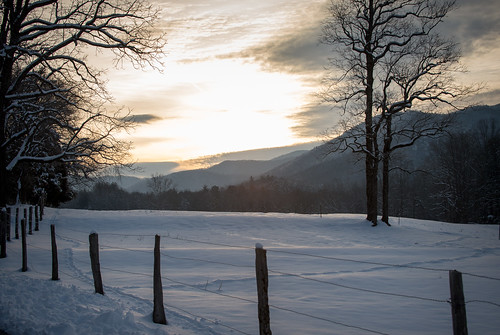
Cades Cove in the Great Smoky Mountains National Park just after first light.* 1/250 @ f10, ISO 400.
Cades Cove in the Great Smoky Mountains National Park just after first light. 1/250 @ f10, ISO 400.
Day one began at the entrance to the 11-mile one-way Cades Cove loop road along with a half dozen other cars waiting for the park ranger to open the gate. The plan was to photograph the sunrise, however, the ranger didn't open the road until roughly 7:20, so the sun was already over the horizon. The first day of any assignment, whether a paid job - or like this, a self-assignment - brings with it some anxiety and anticipation. I've never been able to shake that, but, of course, the only thing to do is just start shooting. Anything will do, the point is to just start shooting.
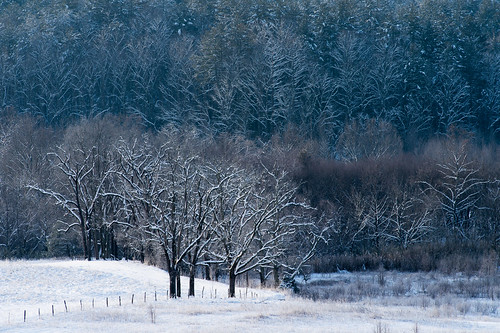
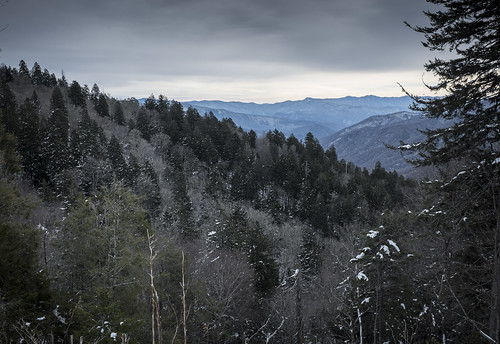
Because temperatures remained cold in the morning, recent snow still stuck to the trees, offering nice contrast between the bare trees in the foreground and the pines in the back. 1/320 @ f13, ISO 400. TIP: Using a long telephoto lens compresses the scene and enhances the contrast between foreground and background.
Because temperatures remained cold in the morning, recent snow still stuck to the trees, offering a nice contrast between the bare trees in the foreground and the pines in the back. 1/320 @ f13, ISO 400. TIP: Using a long telephoto lens compresses the scene and enhances the contrast between foreground and background.
So as I entered the loop with the sun already rising fast, I pulled over at the first opportunity and began taking photographs. It wasn't great, but it did fit the idea that I start shooting. Ideally I would have been able to scout the location so that I had a better idea of where to stop along the 11-mile loop to get that first shot. With 11 miles to cover you never really know what's ahead of you and since it is a one-way loop, you can't turn back. I did four trips around the loop, two in the morning and two in the afternoon.
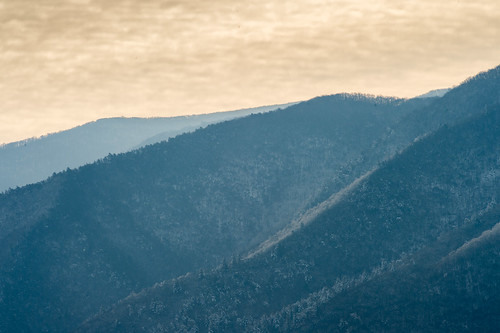
Still fairly early in the morning there was a slight warmth to the sky while the mountain has a blue-green look. The colors change throughout the day offering many looks at the same scene. 1/800 @ f16, ISO 400.
Being unfamiliar with the route, I pulled over almost every opportunity, got out of the car and looked around. Sometimes I grabbed my camera and shot, other times, I quickly returned to the car and headed for the next turnout. My goal was to make at least one loop as fast as possible, without missing any photos along the way and then take more time during subsequent loops.
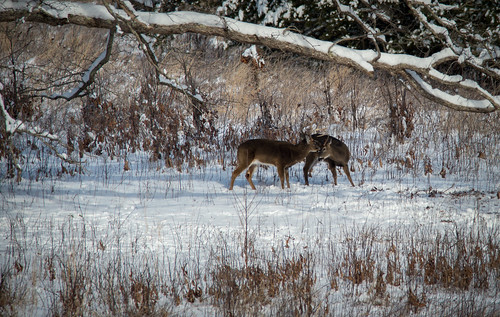
Deer were the most visible wildlife I saw during my visit. Here two bucks greeting each other. 1/250 @ f8, ISO 400.
Deer were the most visible wildlife I saw during my visit. Here two bucks greeting each other. 1/250 @ f8, ISO 400.
One thing almost all visitors to Cades Cove are sure to see is wildlife. Everything from horses, deer, turkey, elk, wolves, fox, coyotes and black bear*. Your chances of just spotting these creatures are reduced while driving, especially by yourself. I did spot some bucks in the distance and stopped to photograph them for about 20 minutes. I then walked to the other side of the street and that is when I spotted two coyotes moving across the field and finally before getting back in the car, spotted a bird Flicker Woodpecker off to the left. Three nice animals all because I stayed put for a while.
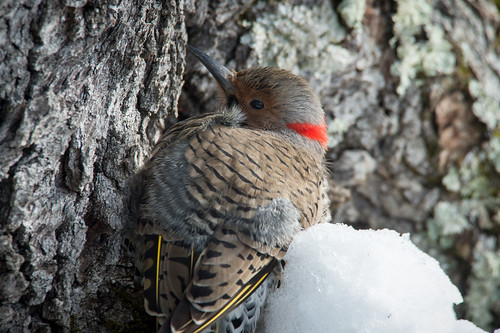
Not all wildlife is large and easy to spot. This Flicker Woodpecker (yet to be identified) was only a short distance from my feet as I was standing around looking at the great vistas. 1/200 @ f13, ISO 400. TIP: Don't forget to look down and always be ready to shoot.
But it is the Great Smoky Mountains, so much of the time on the first loop was spent photographing them. One thing I noticed is that the color temp and look of these mountains change throughout the day depending on light and angles. That was fun; it was like taking a completely different photo of the same scene each time.
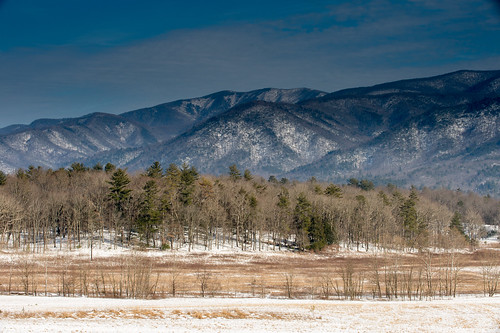
Later in the day the mountains took on a different color and with the warming temperatures and snow melting, more of the grass became visible and provided a warm contrast to the cool mountains and sky. 1/50 @ f22, ISO 200, Cokin graduated ND filter.
Along the way, there are a number of structures and old cabins to explore. During the second loop as the sun rose, but still provided some quality light, I made sure to explore a few and am glad I did. I was drawn by the warm look of the wood that contrasted with the snow and also the shadows created by fences and the buildings.
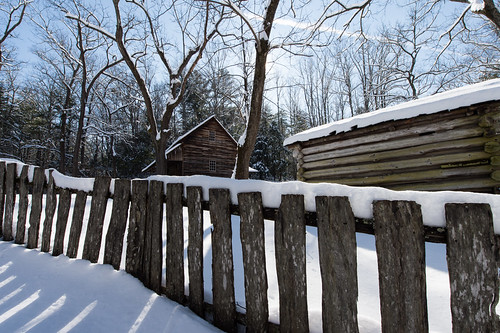
Tipton Place is near the end of the loop and offered several structures to photograph. 1/160 @ f20, ISO 400, Exp. Comp. +1. TIP: I shot from a low angle since the snow surrounding the area had been trampled.
Tipton Place is near the end of the loop and offered several structures to photograph. 1/160 @ f20, ISO 400, Exp. Comp. +1. TIP: I choose to shoot from a low angle since the snow surrounding the area had been trampled.
Typically there is more parking located at these sites and since I was already exploring the buildings, it seemed like a good time to explore the surrounding woods. Don't be afraid to walk off the road and into the woods, you might be surprised what is just out of site.
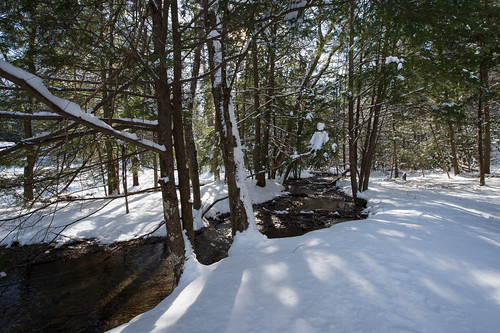
This small stream runs past Tipton Place and allowed me to take advantage of some nice light streaming though the trees. 1/50 @ f20, ISO 400, Exp. Comp. +1. TIP: When shooting into the sun, use the tree or branch to block light from hitting your lens.
This small stream runs past Tipton Place and allowed me to take advantage of some nice light streaming through the trees. 1/50 @ f20, ISO 400, Exp. Comp. +1. TIP: When shooting into the sun, use the tree or branch to block light from hitting your lens.
When I returned in the afternoon it was a different experience for several reasons. First, the temperature had risen 30 degrees which meant the snow was melting fast. The first place I noticed this was the trees. Also, the number of cars making the loop had more than tripled quadrupled, which meant traffic jams as people would just stop in the middle of the one-lane road, mostly to look at deer. So it took more than twice as long to make the loop as it did in the morning. And this is the winter, so be prepared in the Spring. Again, my suggestion would be to take your time and not worry about spending too much time in one location. Why not let the wildlife come to you.
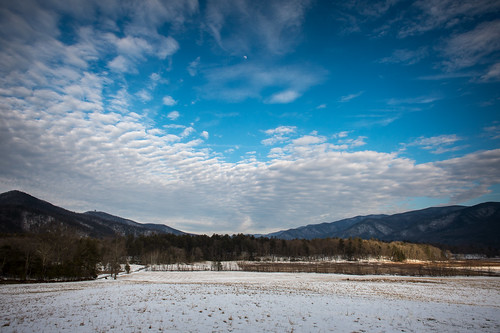
Clouds started to build and the moon came out in the late afternoon once again giving a very different look to the mountains. 1/50 @ f22, ISO 200, Cokin graduated ND filter. TIP: When you have interesting clouds, grab a wide angle and aim high.
With the first day of shooting down, my plan for tomorrow is to return to Cades Cove and a few locations I've identified along the loop in the hopes of getting a better sunrise. Then I'll start making my way to Gatlinburg, shooting and scouting along the way.


* Bears hibernate in the winter.
PHOTOGRAPHING THE GREAT SMOKIES - THE PLAN AND THE GEAR

Ever since my trip to Arizona in December 2012, I've been thinking about another self-assigned photography trip, but with a busy work schedule, the time just slipped by.

During the ensuing years, many locations ran through my mind and as 2014 was drawing to a close, I finally decided that I would visit Yosemite National Park during the last week of February 2015. I started the research and planning the flights, hotels, etc., but again time passed and in January when I finally got around to actually making reservations, the trip just started falling apart, mostly due to lodging. The first lesson, commit early.

For a while, I figured that more time would pass before I launched into another adventure. However, I never quite removed the vacation days from my calendar and I just couldn't shake the notion that I wanted to get out and photograph. So again, I started thinking about possible locations and one place kept coming to mind - The Great Smoky Mountains National Park.

I visited the park last year while driving home from Memphis, but only spent the day, but knew then that I wanted to return. Fujifilm X100S, F5.6, 1/550 at ISO 400

I visited the park last year while driving home from Memphis, but only spent the day, but knew then that I wanted to return. Fujifilm X100S, F5.6, 1/550 at ISO 400.

My current plan is to spend two nights in Townsend, Tennessee, one night in Gatlinburg, Tennessee, and one night in Boone, North Carolina, giving me close to four days of shooting. I plan on photographing Cades Cove, Tremont, and Newfound Gap. Unfortunately, popular locations such as Roaring Fork and Clingmans Dome might be out due to winter road closure although I am bringing snowshoes and could possibly hike in.

If you have been following the weather then you know that the East Coast has been experiencing extremely cold temperatures along with snow and ice. The Smokies are no different, so I've been monitoring two Twitter accounts, @GreatSmokyNPS and @SmokiesRoadsNPS, to keep up-to-date on road and park conditions. While most of the photographs I see while doing research were taken during the spring, I love photographing in the winter and, of course, photographing now will hopefully allow me to get images that are different from the rest.

That's the logistics part of the plan, so what about the gear.

Since I'll be driving to this location, I'm probably going a little heavy gear wise, plus I'll need to pack plenty of cold weather gear. And much of the gear I'm bringing is similar my Arizona trip, just updated models.

Cameras will consist of a Nikon D4S along with my Fujifilm X100S. For lenses, I'm bringing the Nikon 14-24mm, 24-70mm, 70-200mm and a 300 2.8. I'll also add a 2x teleconverter.

For a computer, storage and software, I'm using a Macbook Pro 15" with a LaCie Rugged 1 TB USB 3.0 Mini Disk Portable Hard Drive for backup. Software includes Photo Mechanic for ingest and captioning and Lightroom 5 and Photoshop CC (2014), to post-process the images. And various camera storage including CompactFlash cards ranging from 16 - 64GB and a 64GB XQD card.

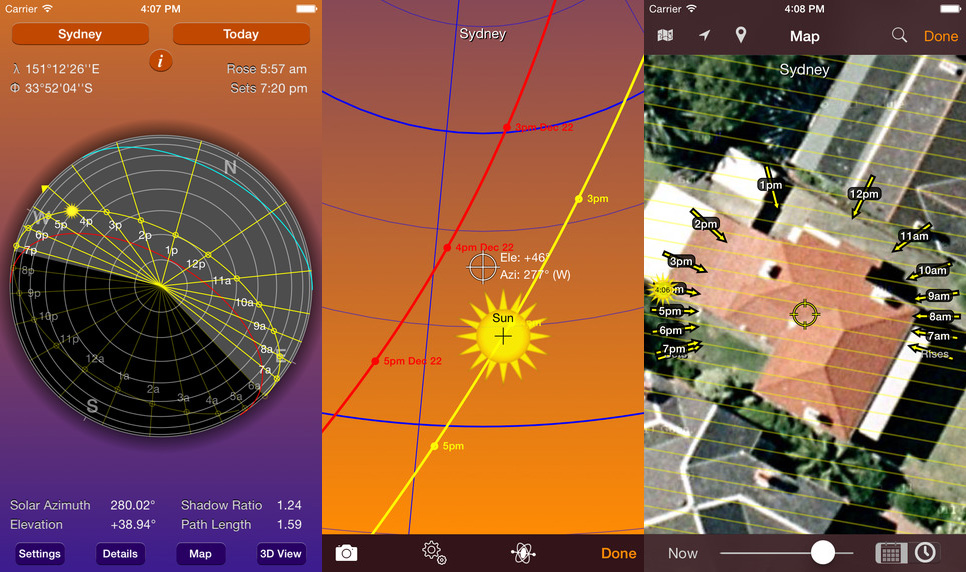
I will also bring my iPad, mostly for two Apps that I rely on during travel. First is Sun Seeker, which provides sunrise and sunset times and also shows a map view of sun direction for each daylight hour and 3D views of the solar path. Second is The Weather Channel which comes in handy for planning each day. 

Three screen shots of the Sun Seeker app available for the iPad or iPhone.

Three screen shots of the Sun Seeker App available for the iPad or iPhone.

To support the camera's I'm bringing two tripods, a Bogen Model 3033X and a Gitzo Series 00 Carbon 6X with an Arca-Swiss Monoball Z1 ball head as well as a Gitzo monopod.

Rounding out the accessories will be a Nikon SB910 flash, SU 800, PocketWizard Plus (to use as a cable release), and a Zacuto Z-Finder Pro. And finally, something that I'm really excited to use on this trip, the Cokin Z Pro Series ND Graduated Filter Kit. I have not used anything other than a UV filter in front of my lenses since I started shooting digital in 1999. Recently for landscape work I've shot HDR and generally liked the results. What I didn't like was the extra steps along with the post processing time.

As with the Arizona trip, I will update this blog each day of the trip with photographs, lessons learned and how I used the camera gear to make it all happen. Following the trip, I'll write an in-depth post on the Cokin ND filters.

ARE "FILM SIMULATION" PRESETS FOR YOU?

MONOCHROME+YeFilter* (black and white with yellow filter)
Fujifilm recently announced that they are bringing film simulation to their official Raw conversion software, Raw File Converter EX, allowing you to take advantage of the features after, rather than having to make the selection while shooting.

This is good news since I think Fuji does an especially good job with their film simulation modes.

Currently when you select one of the film simulation modes, Provia, Velvia, Astia, PRO Neg Hi or Std, and several Black and White modes, on the camera, they are baked into the JPEG file.

As I've mentioned previously on this blog, the mode I prefer when shooting the X100S is MONOCHROME+YeFilter. But that is only half the story because I also shoot JPEG and Raw at the same time giving me the option during post processing to switch to color or do my own black and white conversion to the Raw file. But normally I really like the job Fuji does with its conversion right out of the camera and then spend extra time converting the Raw image to match.

Does this then mean you no longer need these settings available to you on the camera? I can't make that call, but I do like the option to take advantage of them later.

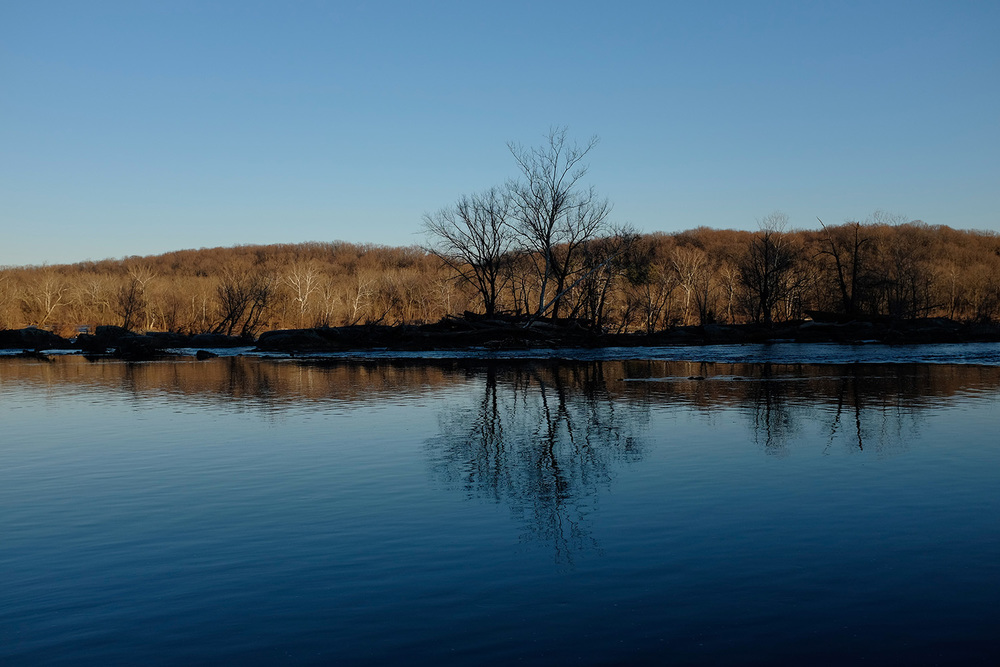
During a recent visit to Great Falls Park in Virginia, I decided to try out the various film simulation modes on my X100S and see for myself how useful they are. **

Provia/STANDARD: I suppose you need an all-around setting and PROVIA/STANDARD offers standard color reproduction suited for a wide range of subjects.
Velvia/VIVID: A high-contrast palette of saturated colors, suited for outdoor photos. And as it turns out, pretty much the hands-down choice for Fall foliage.
ASTIA/SOFT: Enhances the range of hues available for skin tones in portraits while preserving the bright blues of daylight skies. Outdoor portraits.
PRO Neg. Hi: Slightly more contrast than PRO Neg. Std and recommended for outdoor portrait photography.
PRO Neg. Std: Soft-toned palette. The range of hues available for skin tone is enhanced, making this a good choice for studio portraits.

The Fuji X100S also offers the option to bracket, which to most photographers means some sort of multiple exposures. However, the X100S also allows you to bracket Film Simulations, so you don't even have to stop shooting to change settings.

Starting February 26th, you will be able to download the program for free from the Fujifilm website.

But you will have to wait for this feature to be added to the X100S since initially it will only be available for the X-T1, X-A2, X100T, X30, and XQ2.

* All the photos associated with the blog post are resized JPEGs right out of the camera.
** You can also assign a film simulation mode during playback.

MAKING TIME TO PHOTOGRAPH THE NORTHERN LIGHTS

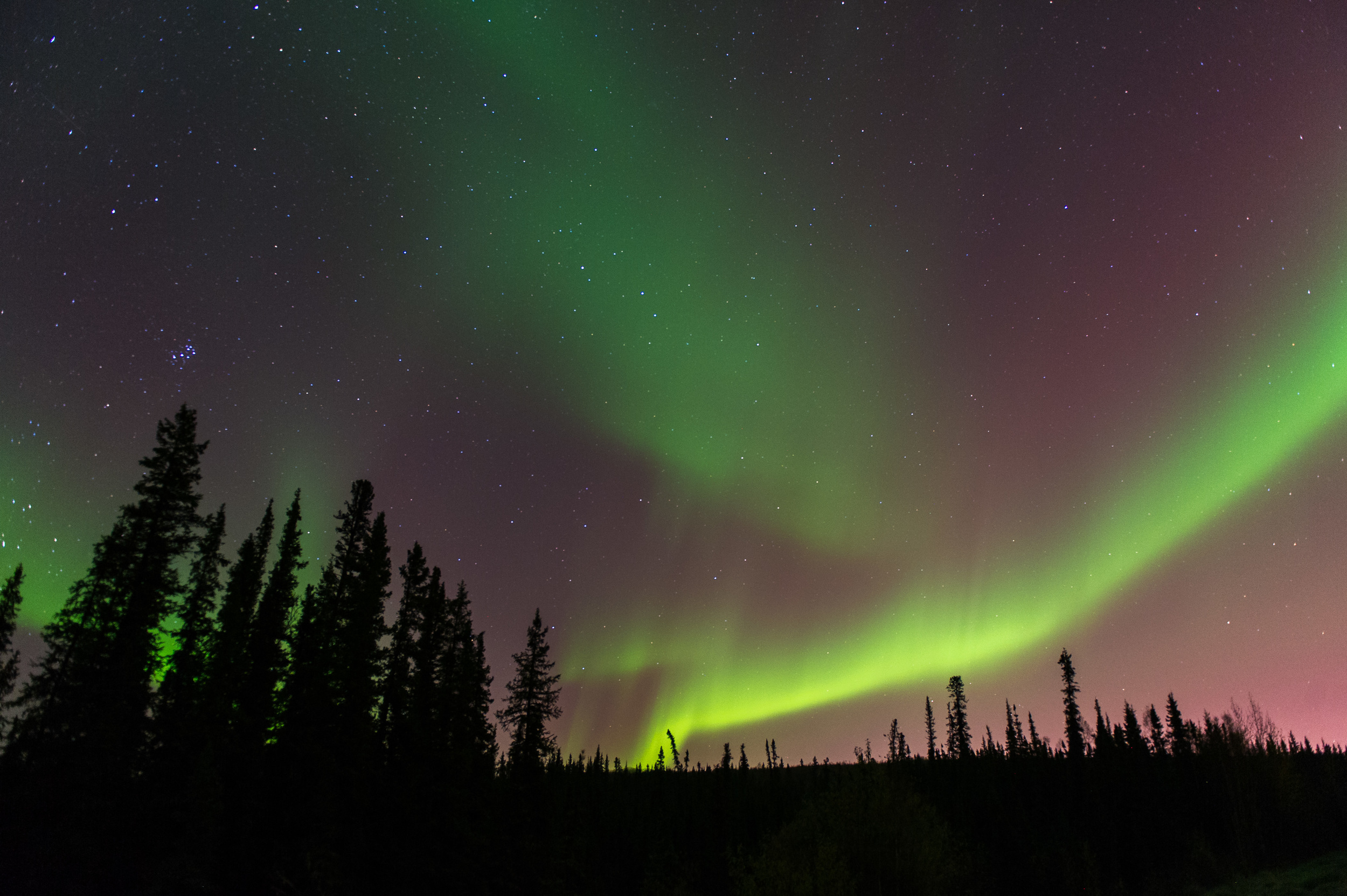
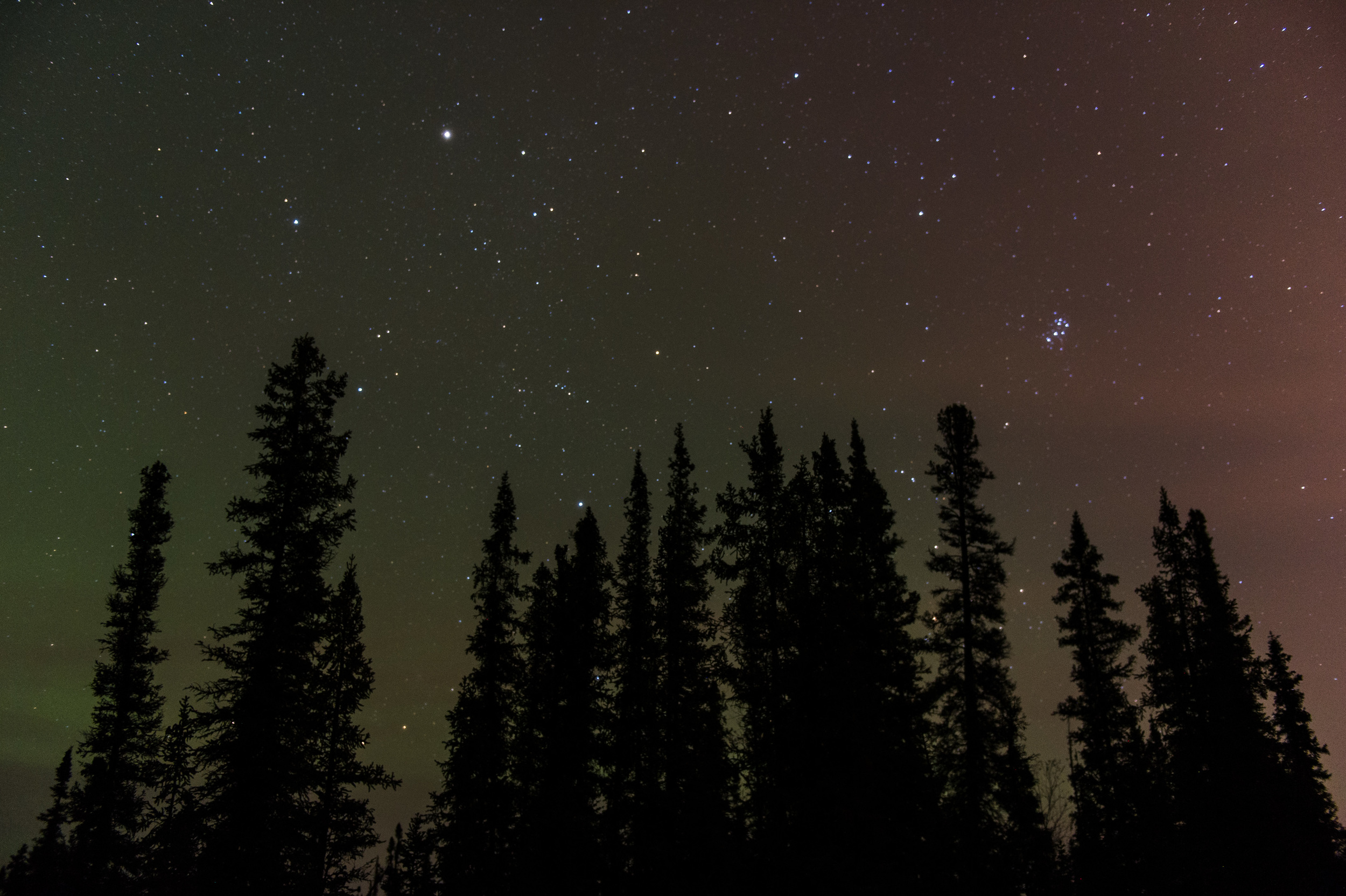
A slightly longer shutter speed allowed additional colors to appear. 1/8 @ f2.8, ISO 3200.

A slightly longer shutter speed allowed additional colors to appear. 1/8 @ f2.8, ISO 3200.

One benefit of traveling on assignment is that you often find yourself in places that you might not otherwise have had the opportunity to visit. And whenever I find myself in these locations, I make it a point to take full advantage of all the photographic opportunities available.

Just to be clear, the assignment that I'm getting paid for always comes first, which means that I really have to muster the energy to do personal work. This was certainly the case on a recent trip to Fairbanks, Alaska, to document Navy-sponsored Arctic research.

Prior to any trip, I will conduct a web search looking for things to do and see at that location. Imagine my surprise when I kept seeing photographs of the Aurora Borealis, or Northern Lights. Was it possible that I would get the chance to not only see this but photograph it? For some reason, I thought you had to be much farther north.

The intensity of light was constantly changing which meant I had to keep adjusting shutter speed. 1/2 @ f2.8, ISO 3200.

The intensity of light was constantly changing which meant I had to keep adjusting shutter speed. 1/2 @ f2.8, ISO 3200.

As you can see from the photographs accompanying this blog that I was treated to a spectacular sight. Some tips and a little more about what it took to take these photographs follows.

1. Getting the photograph means you might lose a little sleep. Rarely are the best outdoor or landscape photographs taken at mid-morning, just after a leisurely breakfast and before a long lunch. Most of the time getting the best photographs means setting up before the sun rises and staying out after it sets. Of course, there is still time for that leisurely lunch, and maybe a nap in the middle of the day, unless you are getting paid to be there, then you have to make the extra effort. So to photograph the Northern Lights I had to set my alarm for midnight, and not just one night, but for three nights in a row until I finally found success.

2. Shooting something for the first time means experimentation. I had never photographed the Northern Lights, but I have photographed stars, so I knew that I first needed a location away from the city lights, which in Fairbanks meant about a ten-minute drive. Ideally, you would scout these locations during the day, but remember since I was on an assignment, I had to locate a safe and awesome location in the dark, which I fortunately did. On the second night, it was clear and the sky was filled with stars, but I didn't see signs of the Aurora Borealis. However, just because I didn't see what I was looking for, didn't mean I wasn't going to still take pictures.

I did not realize that I had captured a faint glow of the Northern Lights on the second night until I downloaded and post processed my photos. 1/13 @f2.8, ISO 1600.

I did not realize that I had captured a faint glow of the Northern Lights on the second night until I downloaded and post processed my photos. 1/13 @f2.8, ISO 1600.

3. Sometimes luck, even beginners luck, is your friend. If you asked me when I returned to the hotel that second night if I had any success, I would have said no. So imagine my surprise when I imported the images into Lightroom 5 and saw the subtle green and yellow hue in the sky. After some post-processing, I liked the images enough to share but still felt I missed out since I didn't actually see anything with my own eyes. Don't give up just because you don't see anything with your naked eye.

4. Persistence pays off. On the third night I once again woke up at midnight and headed back to the same location as the previous night, only this time as soon as I stepped out of the car, even before my eyes adjusted to the darkness, I could see streaks of green in the sky. By the time I set up my tripod and camera, the lights were sweeping across the night sky. I started with the same camera settings as I had the previous night and could tell right away that I wasn't even close. Remember tip two, experiment and don't get flustered. This time instead of a standard night star setup of a 15-20-second exposure at ISO 3200, I was at a two to four-second exposure at ISO 1600. Any longer on the exposure time and the lights were really soft because they were moving and "dancing" so fast. Given more time, I probably would have experimented more with that longer exposure.

5. Look 360 degrees. At first, I was really focused in one direction which had a good foreground of pine trees. It wasn't until I relaxed a bit, turned and started looking around, that I realized there were photo opportunities everywhere, even straight up. I just kept shooting with the Nikon 24-70mm and even though I did bring the 70-200mm with me, for some reason I left the 14-24mm lens in the room. In total, I spent close to an hour taking pictures and if it wasn't for that pesky aforementioned assignment, I would have stayed all night.

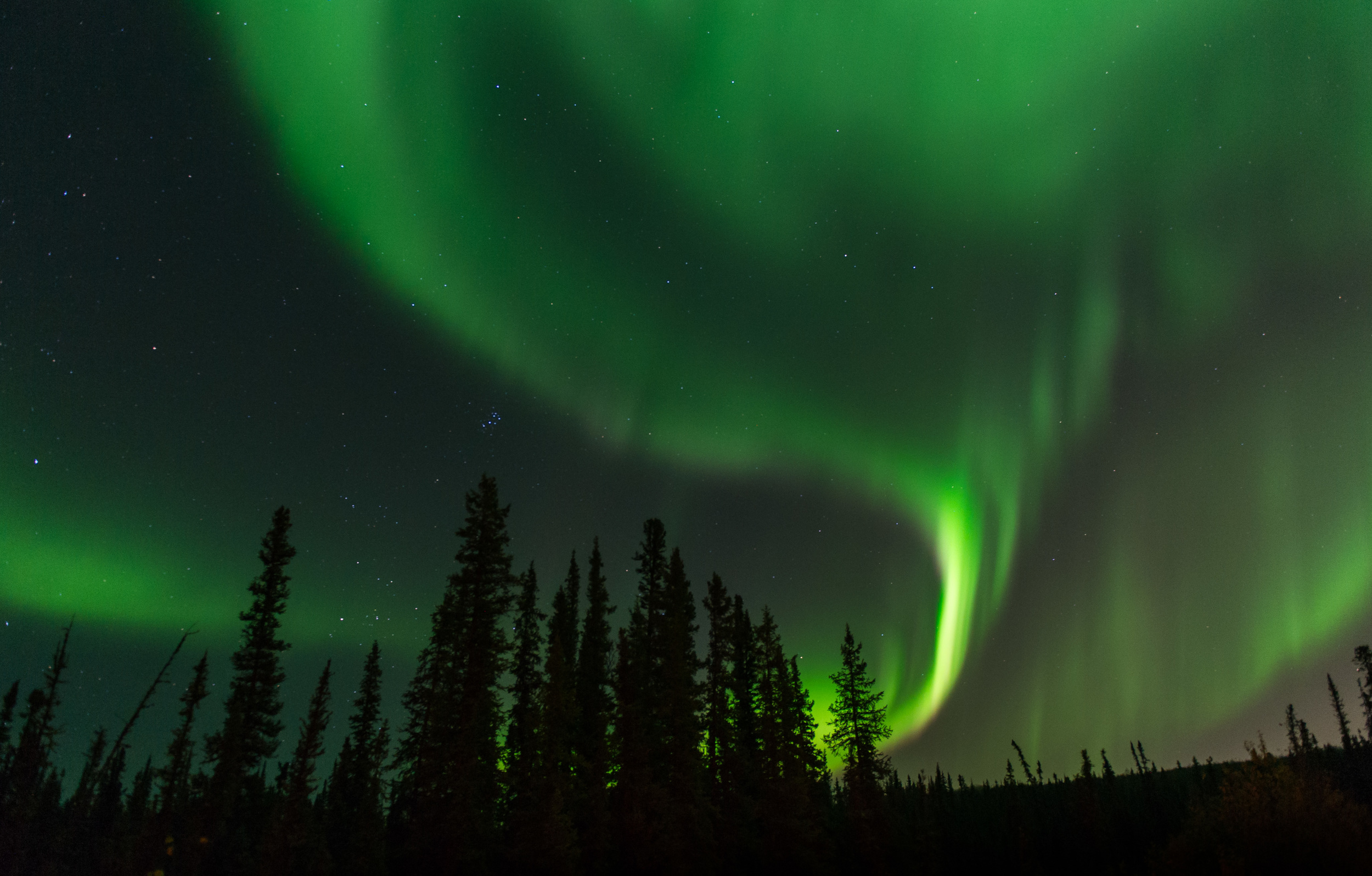
Even shooting vertical at 24mm I was not able to capture everything I was seeing. 1/5 @ f 2.8, ISO 1600.

Even shooting vertical at 24mm I was not able to capture everything I was seeing. 1/5 @ f 2.8, ISO 1600.

After seeing the Northern Lights with my own eyes, I don't regret any sleep I missed and even as I sit here in the Anchorage airport on a five-hour layover and yet another 16 hours before I'm back in Virginia, the lights are still burning bright in my eyes.

Bonus tip:

Many of the hotels in Fairbanks maintain a wake-up list if you wish to be notified whether the Aurora Borealis is active on a particular night. My advice, just head outside and shoot; you may discover more in your photograph than you expected.

WHY ARE YOU WAITING TO TAKE THAT PICTURE?

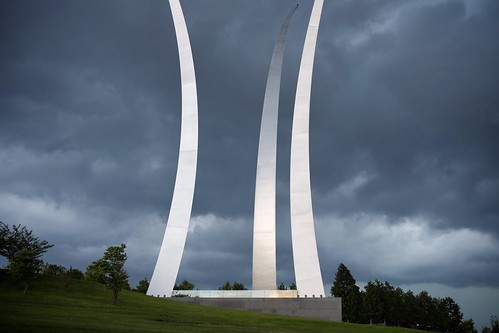
You can't get the photograph, in this case the U.S. Air Force Memorial, if you don't stop and take the picture.
Stop and take that photo today! You know what I'm talking about. Have you been driving past a location every day and thinking what a nice photograph that would make. Why haven't you stopped? What are you waiting for? After all, don't you owe it to yourself to at least stop and see if it truly is your next great photograph or if it is one you can cross it off your list.

Do you make excuses like waiting for the right light or you have to be somewhere in a hurry. I understand, but then how do you explain that when the light is perfect and you have all the time in the world, you still don't stop.

Are you afraid to be disappointed? It happens, that somehow the photo you've pictured from the seat of your car driving by at 50 m.p.h. may in fact look very different when you stop and get a closer look. But the point is, how will you know unless you actually stop.

The two photos posted here are good examples of what I'm talking about. The Air Force Memorial itself can be interesting, but it wasn't until I saw it against a backdrop of storm clouds that I really took notice. The problem was, I saw this same picture on several occasions and just kept driving. Well, earlier this month I finally stopped and captured the image that I had seen previously. I was glad I finally stopped and am pleased with the photo.

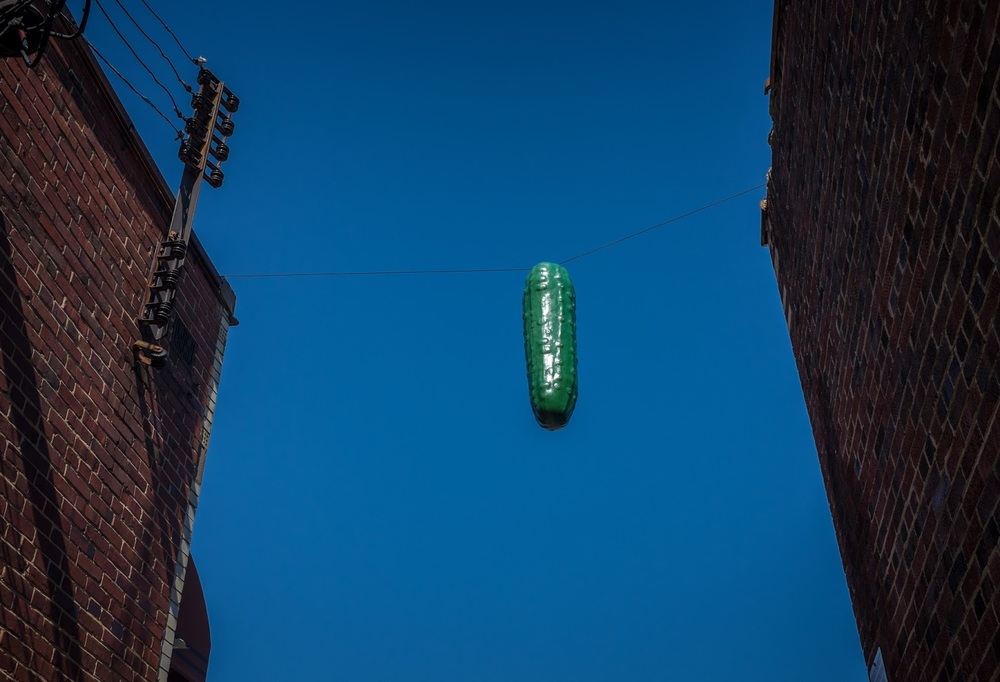
I've been looking at this pickle from my car seat for a year and never stopped. Not thrilled with results, but not ready to cross of my list yet.
I've been looking at this pickle from my car seat for a year and never stopped. Not particularly thrilled with this result, but I'm not ready to cross of my list.
The other thing I've witnessed from my car seat is a large pickle, or what I believe is a pickle (it could be a cucumber), that hangs between two buildings just off the road. I was intrigued and couldn't figure out why it was there, after all there isn't a pickle shop, or even a deli nearby. I guess it really doesn't matter, because once I noticed it, I couldn't drive by without checking it out and thinking about photographing it.

So after nearly a year, yes, a year, I finally stopped and took a picture. The light was alright and the picture is not what I pre-visualized, but at least I finally stopped. I also learned that when I try this again, and yes, I will try again, it will be early in the day, or maybe with a clouds in the sky, but I will take this photo again.

So are your ready to stop and get the picture? Don't wait any longer!